
The Surprise Release
Back tension versus punching the trigger. Why the best shot is the one you didn't decide to take.

Ask a top archer when their shot fires and you will get a strange answer: they don't fully know. The release surprises them, every time, on purpose. This sounds like a contradiction — how can you control a shot you did not decide to take? — but it is the single most important idea in advanced archery. The surprise release is the difference between a score that holds under pressure and one that falls apart.
Punching versus pulling
There are two ways to make the shot go. The first is to command it: you see the sight in the middle and you tell your hand to let go, or you slap the trigger. This is punching, and it is fragile. Because you are choosing the exact instant, your brain anticipates that instant, and anticipation breeds flinching, freezing and eventually target panic. Under competition nerves, the punch gets faster and dirtier and your groups bloom open.
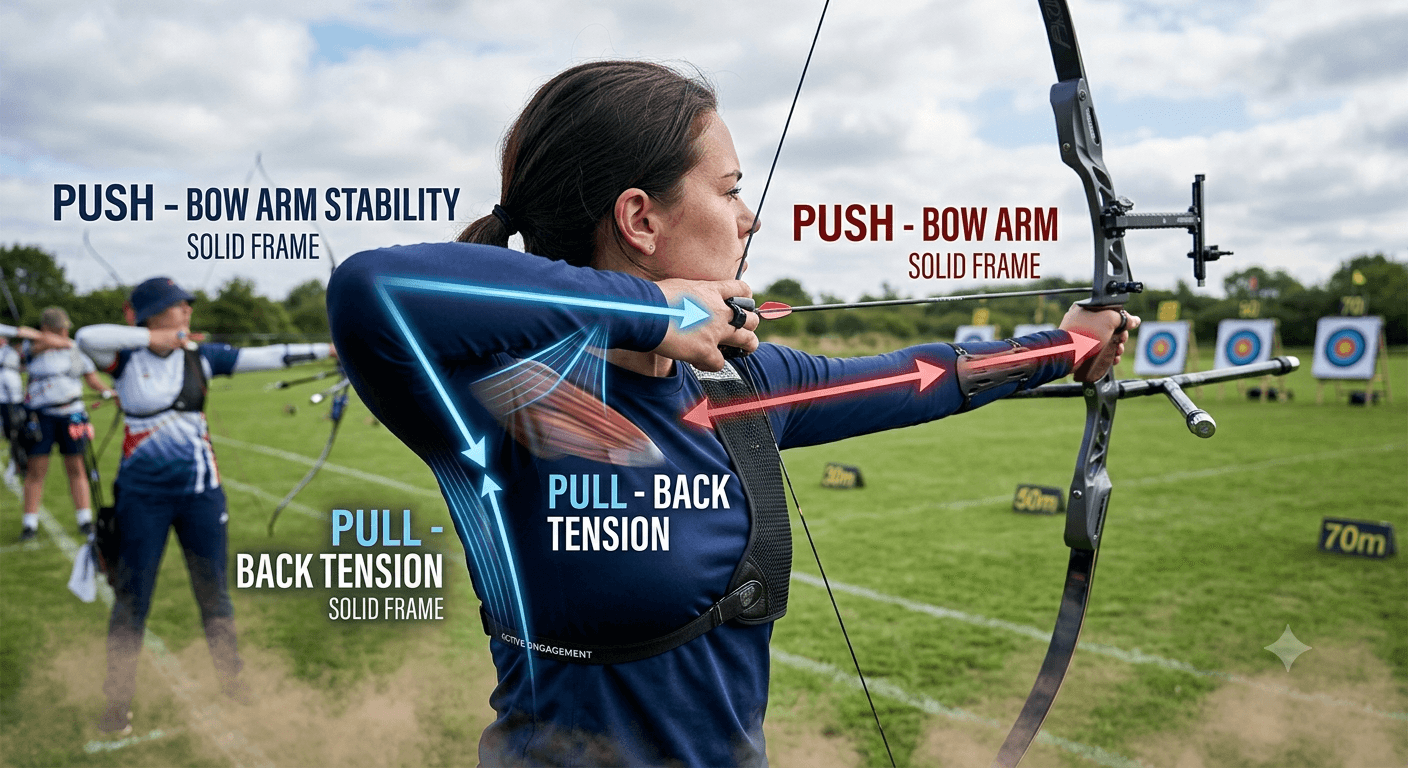
The second way is to let the shot fire itself through back tension. You reach full draw, settle your aim, and then keep pulling — not with your hand, but by squeezing your shoulder blades together so your drawing elbow rotates around behind you. That continued pull is what trips the release. You never decide the moment; the moment arrives. That is the surprise.
Why surprise matters
The reason surprise works is that it removes the thing your nervous system can sabotage. You cannot flinch at a moment you did not schedule. By handing the timing over to a slow, steady muscular process, you take the panic-prone decision out of the loop entirely. The aim drifts in the middle, the back keeps working, and somewhere in there the bow goes off cleanly. Recurve archers use a clicker to anchor this; compound archers use a back-tension or hinge release that fires when rotated, not when squeezed.
How to build it
- Start on a blank bale up close so there is nothing to aim at and nothing to anticipate.
- Reach anchor, then think only about pulling your shoulder blades together — not about your fingers or the trigger.
- Let the shot break on its own. The first clean surprise will feel like an accident. It is the goal.
- Repeat until a commanded release feels wrong and a surprise one feels normal.
Inside NockIQ · Drills Library
The NockIQ Drills Library includes guided back-tension and blank-bale routines that build the surprise release step by step, so the feeling becomes a habit rather than a lucky accident.
Open Drills LibrarySwitching to a surprise release is humbling. Your scores often dip for a few weeks as you give up the false control of the punch. Push through it. Once the surprise release is yours, it does not abandon you when the pressure rises — and pressure is exactly when a punched shot betrays you. The archers who win finals are not braver than you. They have simply made their shot something that happens, not something they have to nerve themselves into doing.
More from the Journal
All articles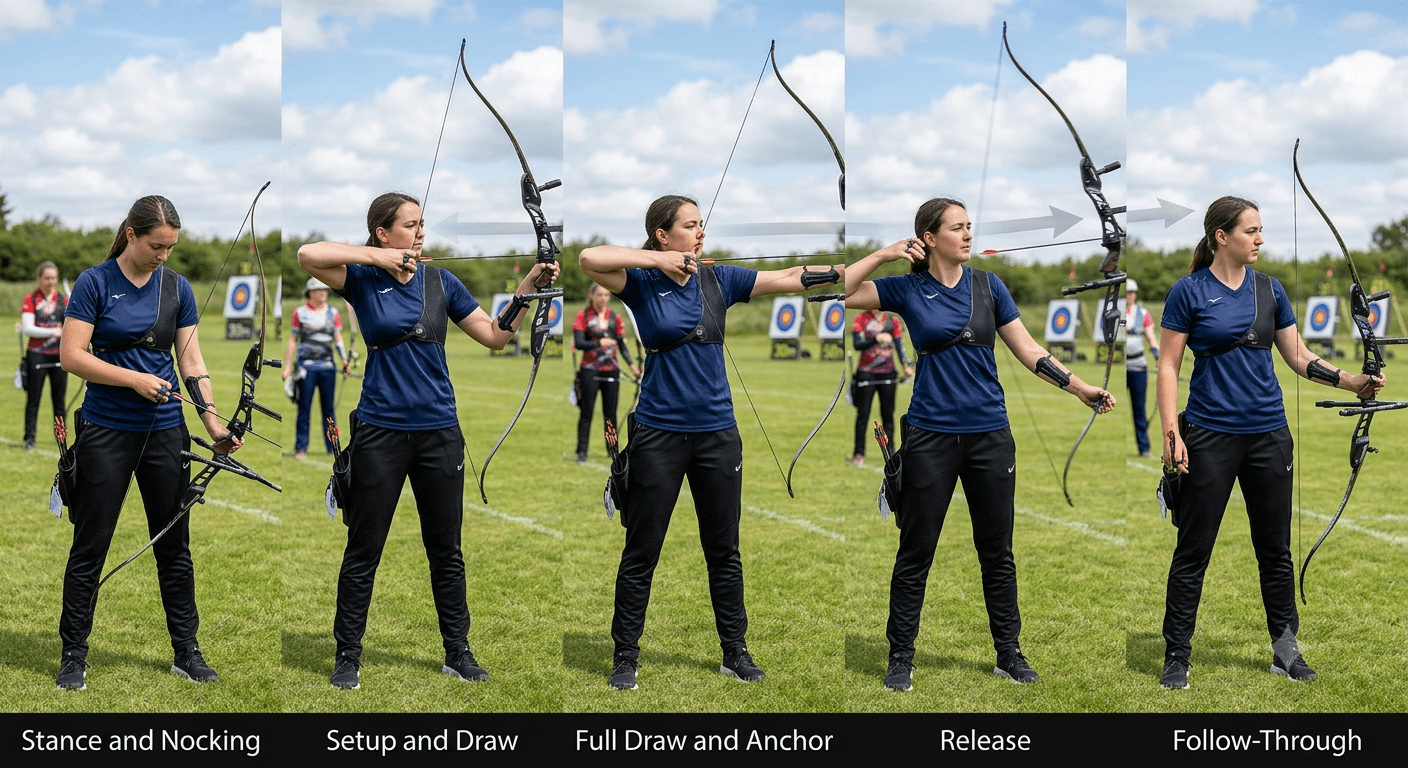
Put this into practice.
Every drill, score and replay in one app — built for archers who want to improve on purpose.