
Archery Form Fundamentals
Stance, grip, posture, bow arm, follow-through. Master the chain and the arrow takes care of itself.
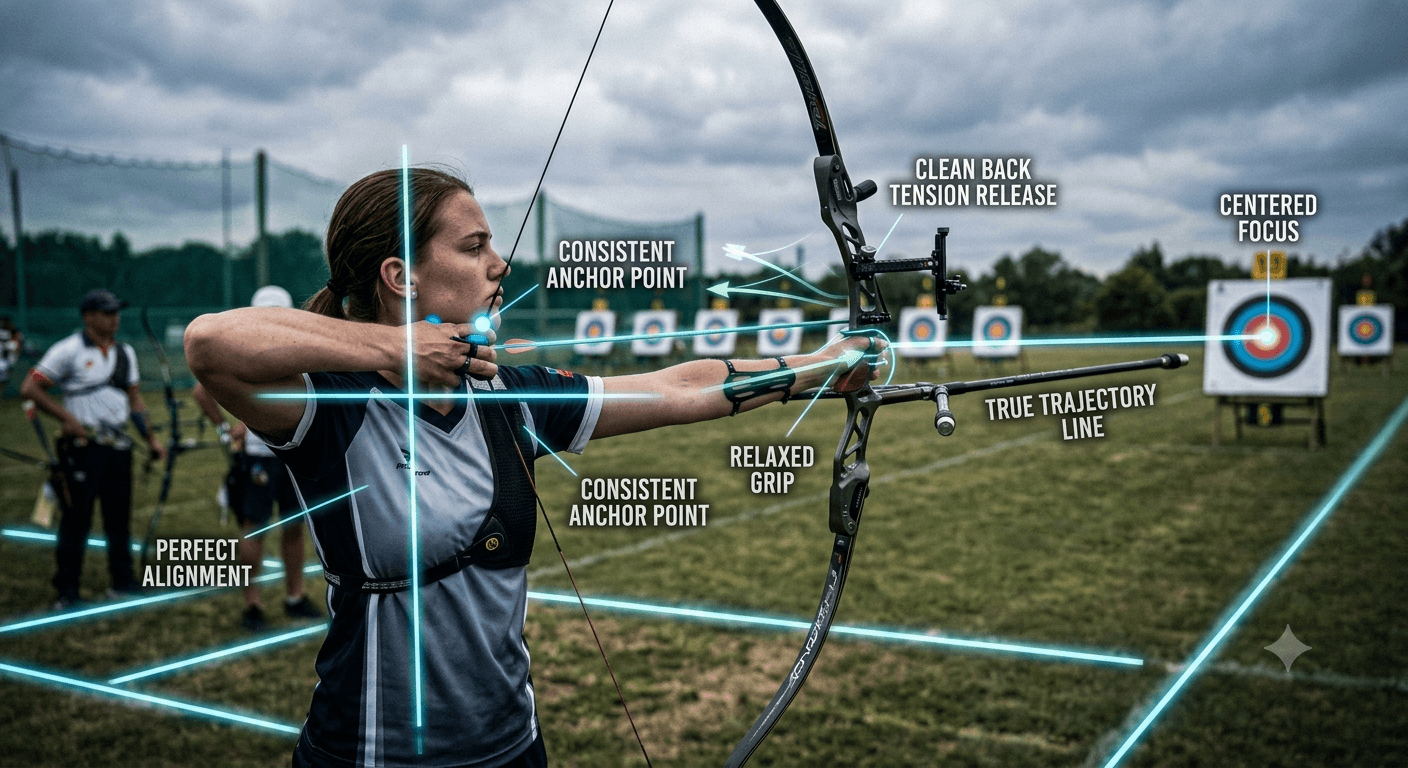
Good archery is a chain of small, boring fundamentals done the same way every time. Beginners chase the perfect release; experts obsess over the foundation underneath it. If your stance, grip and posture are solid, the shot has a fighting chance. If they are not, even a beautiful release lands somewhere it shouldn't. Let us walk the chain from the ground up.
Stance
Your stance is your platform, and a platform should not wobble. Stand with your feet about shoulder-width apart, weight even between both legs, knees soft rather than locked. Most archers start with a square stance — feet parallel to the shooting line — because it is the easiest to repeat. As you advance you may try an open stance, rotating the front foot out, which can give a more stable line into the target. Whatever you choose, the rule is the same: pick one and repeat it, with your feet finding the same spots every time.
Grip
The grip is where most points quietly leak away, because tension here twists the bow at release. Your bow hand should not grab. Let the pressure sit in the meaty pad at the base of the thumb, with the fingers relaxed or lightly curled. A tight, knuckled grip forces the bow left or right as the arrow leaves. Think of the bow as resting in your hand, not held by it. Many archers use a sling so they can keep the hand completely loose and let the bow jump forward freely after the shot.
Posture
Stand tall but not stiff. Your spine should be stacked over your hips, shoulders down and relaxed, head turned squarely to the target rather than tilted toward the string. A common fault is leaning back away from the bow to fight the weight — this collapses your structure and tires you fast. Instead, stay centred over your base so your skeleton, not your muscles, carries the load.
The bow arm
Your bow arm sets the direction of the shot. Extend it toward the target without locking the elbow hard — a slight, rotated bend keeps the elbow out of the string's path. The shoulder is the key: it must stay down and set into its socket, not shrugged up toward your ear. A high, soft bow shoulder is one of the most common reasons arrows scatter, because the whole front side of the shot becomes unstable.
Follow-through
The shot is not over when the string leaves your fingers. Follow-through is what proves your form was honest. After release, your bow arm should stay pointed at the target and your drawing hand should continue back along your neck, driven by back tension. If your bow arm drops the instant you release, you were collapsing early — anticipating the shot rather than letting it happen. Hold your finish until the arrow lands. It feels theatrical and it works.
Inside NockIQ · AI Video Analyzer
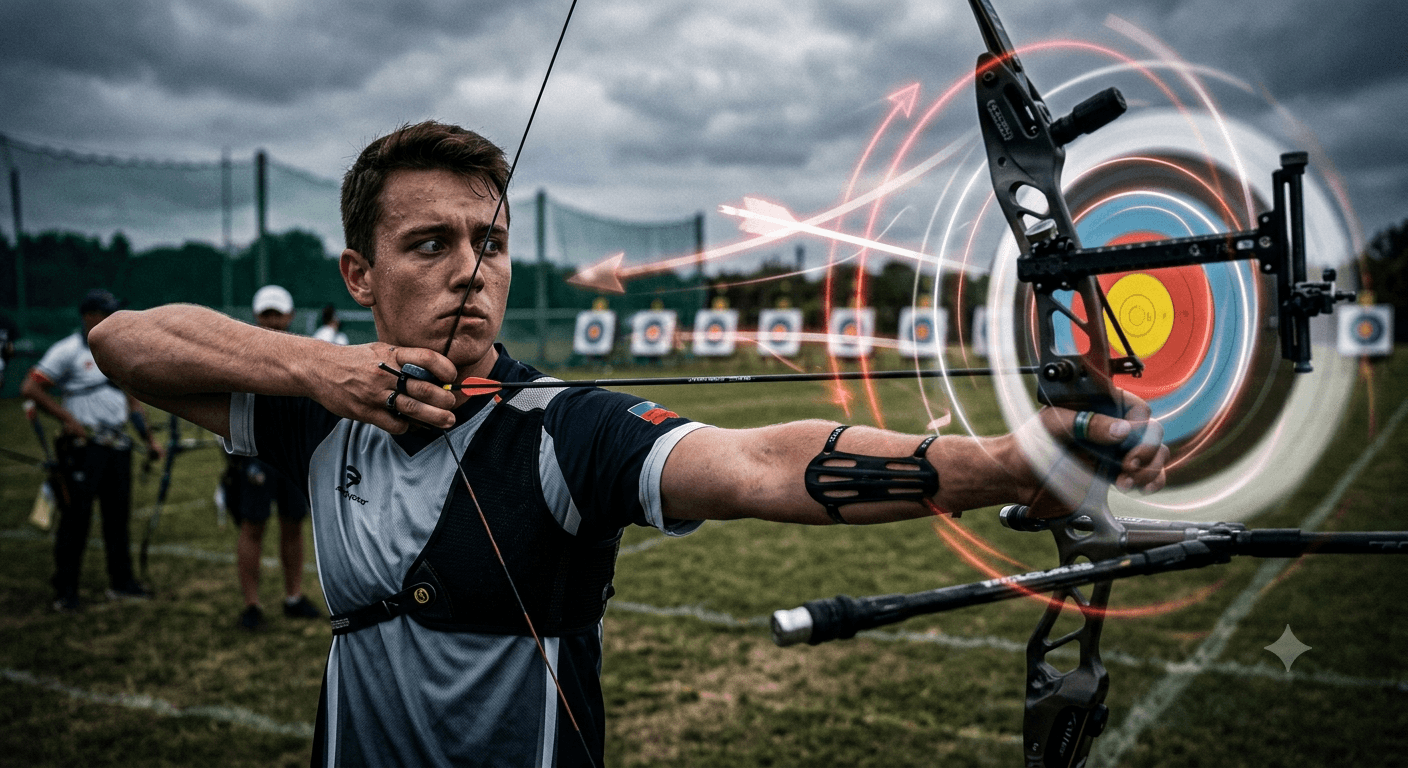
NockIQ's pose overlays trace your bow arm, shoulder line and follow-through frame by frame, turning vague advice like "stay tall" into something you can actually measure.
Open AI Video AnalyzerNone of these fundamentals is glamorous, and that is the point. Build them in order, check them often, and resist the urge to skip ahead to advanced tricks. The archers who shoot tens are not doing anything exotic. They are doing the basics with a consistency that looks, from the outside, almost dull.
More from the Journal
All articles
Put this into practice.
Every drill, score and replay in one app — built for archers who want to improve on purpose.