
Recurve vs Compound vs Barebow
Three disciplines, three feels. Here's how they differ and which one might suit you best.
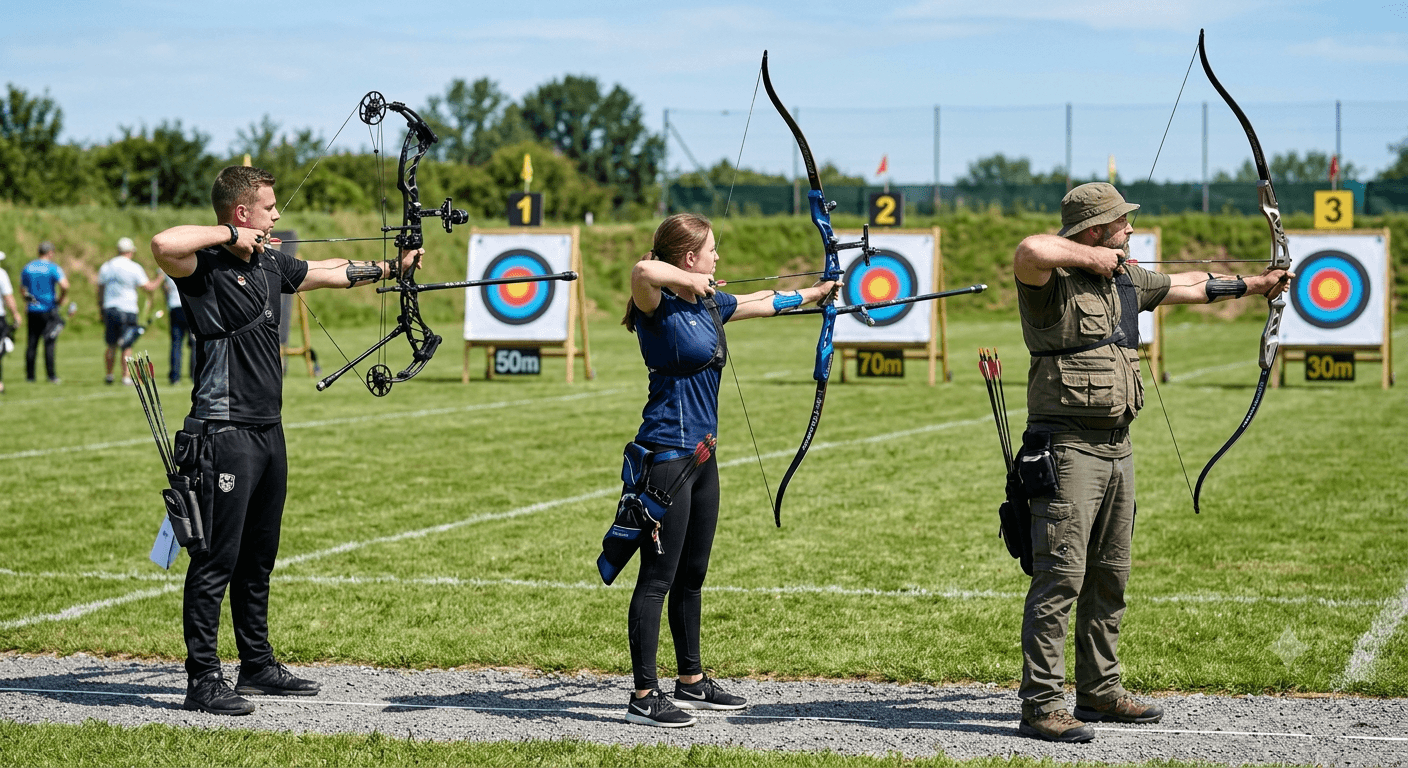
Walk onto any range and you will see three very different bows being shot with three very different rhythms. Recurve, compound and barebow are all archery, but they reward different temperaments and ask for different skills. If you are choosing a path — or wondering whether the grass is greener on another — here is an honest look at what separates them.
Recurve
Recurve is the Olympic discipline and, for many, the purest test. You hold the full draw weight at anchor with your own back muscles, aim through a simple sight pin, and use a clicker to signal the exact draw length. There is no mechanical help — your body is the stabiliser. This makes recurve demanding: small errors in form show up immediately, and holding the weight steady while you aim takes real strength and control. The reward is a deeply satisfying, athletic shot. If you like the idea of mastering your own body and you enjoy the challenge of an unforgiving setup, recurve is for you.
Compound
Compound bows use a system of cams and cables that let off most of the draw weight at full draw, so you hold only a fraction of the peak. That, combined with a magnified scope, a peep sight and a mechanical release aid, makes compound the most precise discipline — the scores are astonishing, with arrows stacked into a fist-sized group at distance. The trade-off is that precision is relentless: because the equipment is so accurate, every tiny inconsistency in your execution is exposed, and the mental discipline required is intense. Compound suits archers who love fine-tuning equipment and chasing the absolute limits of accuracy.
Barebow
Barebow strips archery back to its essence: a recurve-style bow with no sight, no clicker, no stabilisers. Aiming is done by "stringwalking" or by gapping — using the arrow tip and your fingers' position on the string as references. It is the most intuitive and arguably the most romantic discipline, rewarding feel and judgement over gadgetry. Barebow has exploded in popularity because it is affordable, portable and endlessly engaging. If you want a close, hands-on relationship with the shot and you enjoy figuring things out by feel, barebow will hook you.
- Recurve: Olympic, athletic, you hold full weight — best for body-mastery lovers.
- Compound: mechanical, ultra-precise — best for tinkerers chasing perfect groups.
- Barebow: minimal, intuitive — best for feel-based archers who like simplicity.
Inside NockIQ · Shot Timer
Whichever you shoot, timing rules differ — NockIQ's Shot Timer is set to World Archery standards for each discipline, so your practice rhythm matches the clock you'll face at an event.
Open Shot TimerThere is no "best" discipline, only the best fit for you. Many archers shoot more than one over a lifetime, and skills carry across — a clean shot sequence and a steady anchor matter in all three. If you are unsure, borrow each at a club, shoot a few ends, and notice which one makes you want to come back tomorrow. That feeling is your answer.
The tool behind this article
Official Shot Timer
Make range rhythm match competition rhythm.
Run qualification ends, finals, teams, mixed teams, shoot-offs and para formats with the correct whistle sequence.
More from the Journal
All articles
Put this into practice.
Every drill, score and replay in one app — built for archers who want to improve on purpose.